
Healthcare practitioners have a wide array of career opportunities within the pharmaceutical industry. These positions leverage their clinical knowledge and offer pathways to impactful roles in drug development, regulatory compliance, and patient safety. Here’s a closer look at some of the key career options available:
Clinical Research
Healthcare practitioners can transition into clinical research roles such as Clinical Research Associates (CRAs) or Clinical Research Managers. These professionals are instrumental in designing, implementing, and monitoring clinical trials to ensure they are conducted, recorded, and reported according to protocol, standard operating procedures (SOPs), and regulatory requirements. This career path is excellent for those who enjoy science and are meticulous about details.
Medical Affairs
A career in medical affairs involves acting as the bridge between the company and the healthcare community. Medical Science Liaisons (MSLs), Medical Advisors, or Medical Directors are key roles within this sector. These positions require strong communication skills as they provide scientific and clinical support for a company’s products while also gathering insights that can drive the strategic direction of product development and marketing.
Drug Safety and Pharmacovigilance
Healthcare practitioners in drug safety or pharmacovigilance are responsible for monitoring and reporting the effectiveness and any adverse effects or other safety issues related to pharmaceutical products. Roles in this area are crucial for ensuring that drugs on the market are safe for patients and meet regulatory standards. This field is ideal for those who are detail-oriented and have a strong commitment to patient safety.
Regulatory Affairs
Regulatory affairs specialists help navigate the complex landscape of drug approval by ensuring that products comply with all of the regulations and laws pertaining to the pharmaceutical industry. This role requires a thorough understanding of legal and regulatory issues and an ability to communicate effectively with regulatory bodies like the FDA or EMA.
Market Access
Market Access professionals work to ensure that the pharmaceutical products are accessible to patients and healthcare providers at the right price and at the right time. This involves strategic planning and coordination with various stakeholders including payers, government officials, and healthcare providers to ensure that new therapies are successfully integrated into the healthcare system.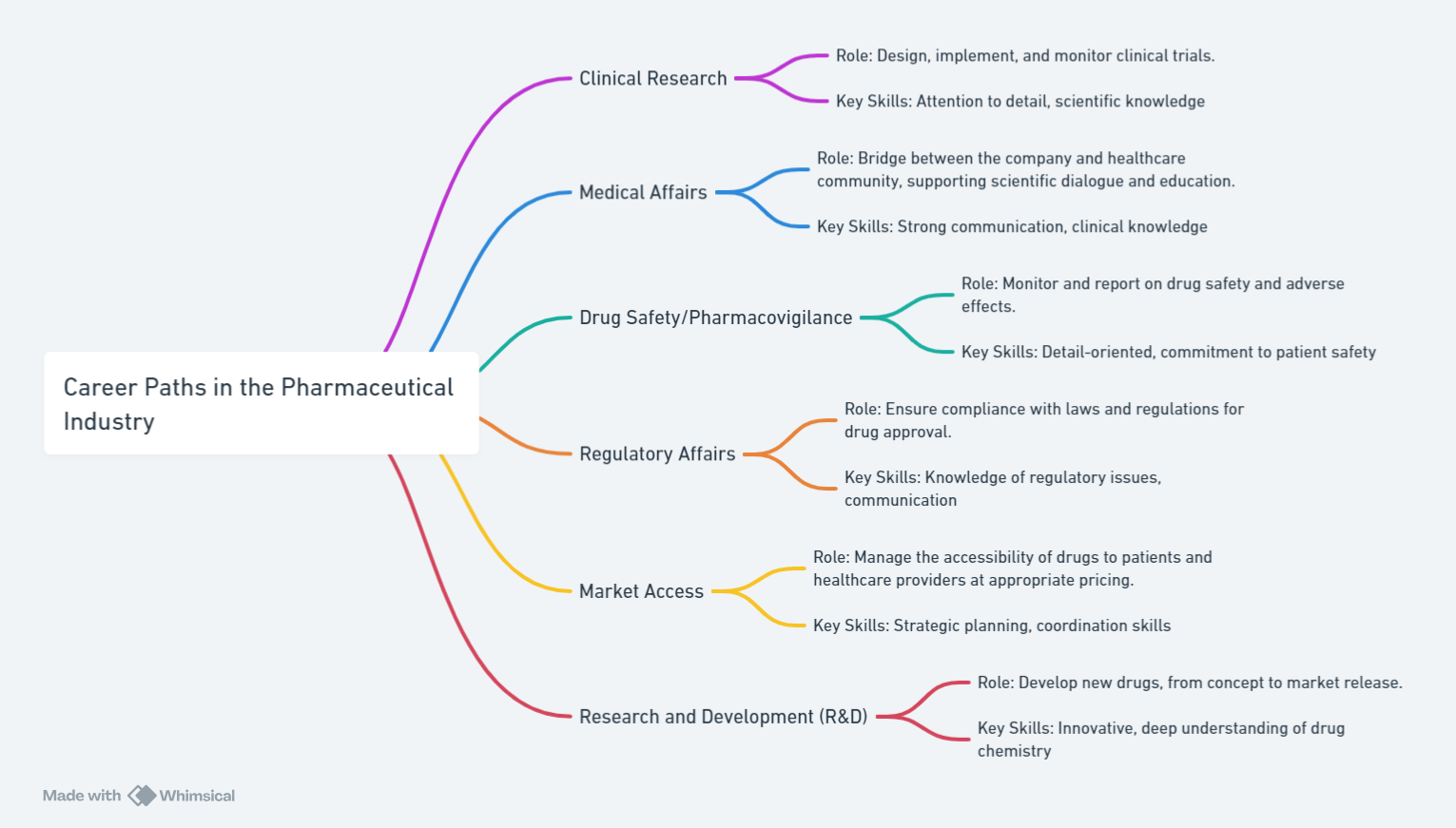
Research and Development (R&D)
For those who are more inclined towards innovation and product development, a career in R&D might be the right fit. Positions in this area involve working on the development of new drugs, from initial concept to market release. This requires a deep understanding of drug chemistry, process development, and a passion for research and innovation.
Conclusion
The pharmaceutical industry offers a broad range of career paths for healthcare practitioners looking to use their expertise in new ways. Whether interested in the science of drug development, the communication of medical information, or the safety and efficacy of pharmaceutical products, there are numerous opportunities to contribute to healthcare advances. Each role not only demands specific skills but also offers unique rewards, making the pharmaceutical industry a fulfilling field for those seeking diverse career opportunities.
| Career Path | Role Description | Key Skills Required |
| Clinical Research | Design, implement, and monitor clinical trials. | Attention to detail, scientific knowledge |
| Medical Affairs | Bridge between the company and healthcare community, supporting scientific dialogue and education. | Strong communication, clinical knowledge |
| Drug Safety/Pharmacovigilance | Monitor and report on drug safety and adverse effects. | Detail-oriented, commitment to patient safety |
| Regulatory Affairs | Ensure compliance with laws and regulations for drug approval. | Knowledge of regulatory issues, communication |
| Market Access | Manage the accessibility of drugs to patients and healthcare providers at appropriate pricing. | Strategic planning, coordination skills |
| Research and Development (R&D) | Develop new drugs, from concept to market release. | Innovative, deep understanding of drug chemistry |